What Size Planter Pot to Choose: The Diameter Guide
You've found the perfect plant, but the planter pot either swamps the inner pot or squeezes it to breaking point. Size changes everything: it makes the difference between a harmonious arrangement and a detail that jars. Here's how to choose the right diameter, without getting it wrong.
The two measurements that really matter

Before we talk aesthetics, let's talk numbers. A planter pot is chosen on two dimensions, and confusing them is the most common mistake.
- The internal diameter: this is the width available to hold your plant's pot. It's what determines whether it fits, or not.
- The height: it affects the visual balance and decides whether or not the grow pot is hidden.
When a product page gives a diameter, always check whether it refers to the external or internal diameter. The difference can reach two to three centimetres depending on the wall thickness, and it's precisely this gap that makes a pot slot in neatly or get stuck.
The +2 cm rule, simple and effective

Here's the benchmark to keep in mind: the internal diameter of the planter pot should exceed the diameter of your plant's pot by about 2 centimetres. No more, no less, in most cases.
Why 2 cm? Because this space lets you slide the pot in and out easily, while keeping the arrangement snug and neat. Below that, insertion becomes awkward. Beyond 4 or 5 cm, the pot swims around inside, tilts, and leaves an unsightly gap visible from above.
A concrete example: a plant delivered in a 17 cm pot will sit perfectly in a planter pot with a 19 cm internal diameter. For a 24 cm pot, aim for a planter pot of 26 to 27 cm.
And what about height?
Ideally, the rim of the planter pot should sit just level with the grow pot, or slightly above it to conceal it entirely. If your planter pot is too deep, a simple spacer at the bottom, using a support or paper, lifts the plant to the right height. It's a decorator's trick that solves plenty of situations.
Which size for which plant
Each type of plant has its own diameter range. Here are reliable guides to get it right first time.
Small plants and succulents
Think of small desk plants, succulents or low arrangements. They do well in planter pots of 9 to 14 cm in diameter. Perfect on a shelf, a windowsill or a desk, they add a touch of green without cluttering.
Medium plants for tables and consoles
A trailing plant, a small dense foliage or a fern looks its best in a planter pot of 15 to 22 cm. It's the go-anywhere format, the one that dresses a console, a side table or the corner of a low unit.
Large plants and young trees
For a generous floor plant, a banana plant or voluminous foliage, count on a planter pot of 24 to 35 cm. Beyond that, you enter the realm of artificial trees, which often require bases of 35 to 50 cm to hold their proportion and balance.
Tall artificial trees
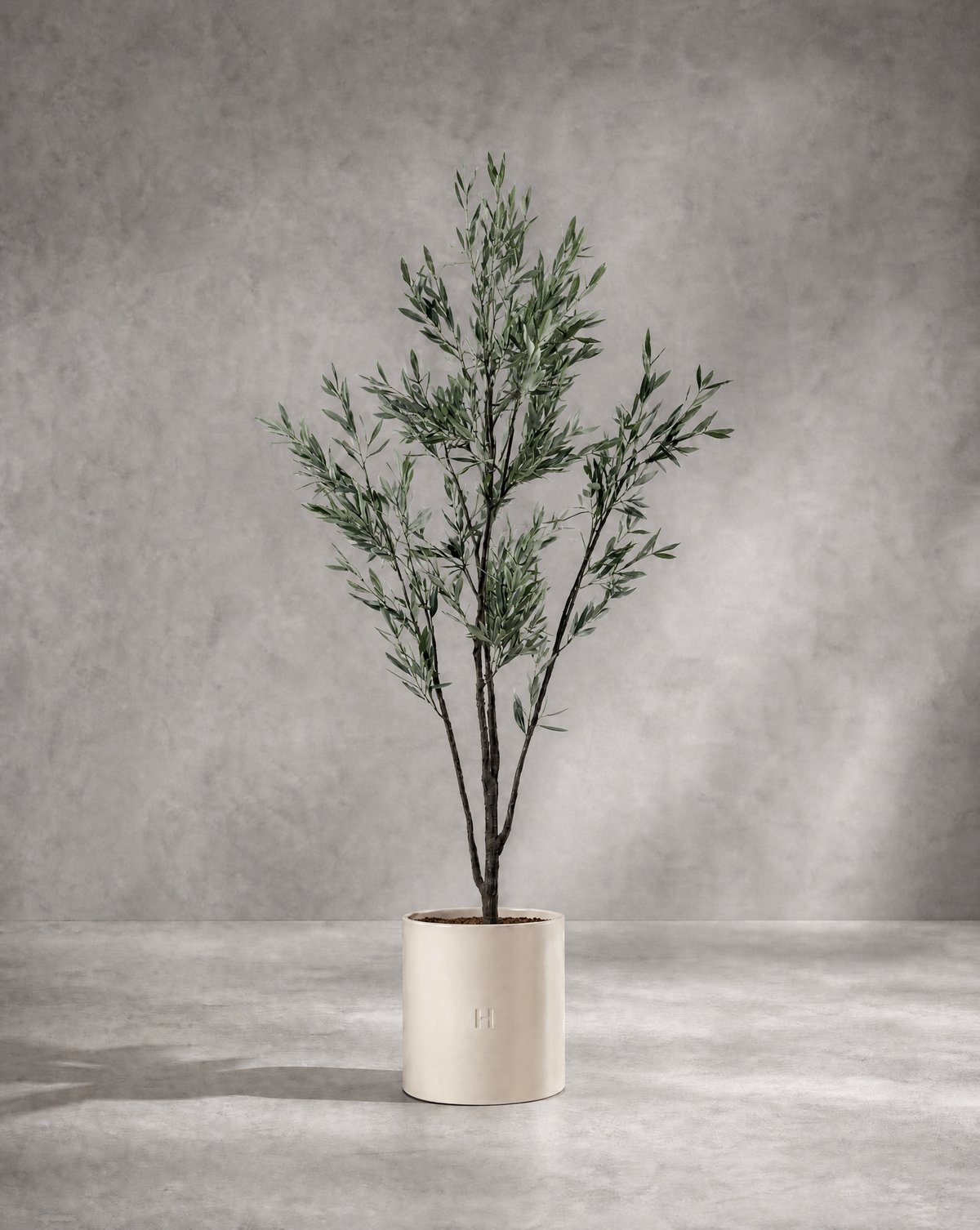
An olive tree or a large specimen with ample foliage needs a wide base, not only for aesthetics but also for stability. A planter pot that's too narrow beneath a metre-and-a-half tree gives an unstable, lopsided silhouette. Better generous than timid. You'll find a wide choice of artificial plants and trees designed to suit these formats.
Proportion and style: beyond the diameter
Once the technical size is settled, two criteria refine the final result.
- The plant-to-planter proportion: visually, the total height of the plant should be about two to three times the height of the planter pot. Foliage that's too tall on a tiny base looks fragile, while a small plant in a large pot seems lost.
- Weight and mobility: a large, heavy planter pot is hard to move for vacuuming beneath it or rearranging the room. That's exactly the appeal of lightweight planter pots. At HOPER, we offer lightweight designer planter pots, easy to move day to day.
As for colour, a soft, neutral finish showcases the foliage without stealing its thunder. Our ivory planter pot is a good example: a warm tone that suits almost any interior, from the most pared-back to the most natural.
FAQ: your questions on planter pot sizing
How do I measure the diameter of my current pot?
Lay a tape measure across the opening of the pot, from one inner edge to the other, passing through the centre. You get the diameter to match with the internal diameter of the future planter pot, adding about 2 cm.
My planter pot is too big, what should I do?
Two simple solutions. Prop the pot up with a support at the bottom to raise it to the right height, or fill the space around it with decorative pebbles or moss. The whole thing instantly regains a neat, deliberate look.
Do I need a bigger planter pot for an artificial tree?
Yes. A tree needs a wide base for a balanced look and good visual stability. For a specimen of a metre or more, go for a diameter of 30 cm and above, depending on the spread of the foliage.
The right diameter, and everything falls into place
Remember the essentials: measure the internal diameter, apply the +2 cm rule, and mind the proportion between the plant and its base. With these three reflexes, you'll never get it wrong again. Our in-stock items ship within 48 hours, while pre-order items are dispatched from late October 2026. Take your time browsing our planter pot collection to find the size and shade that will show your plants off at their best.