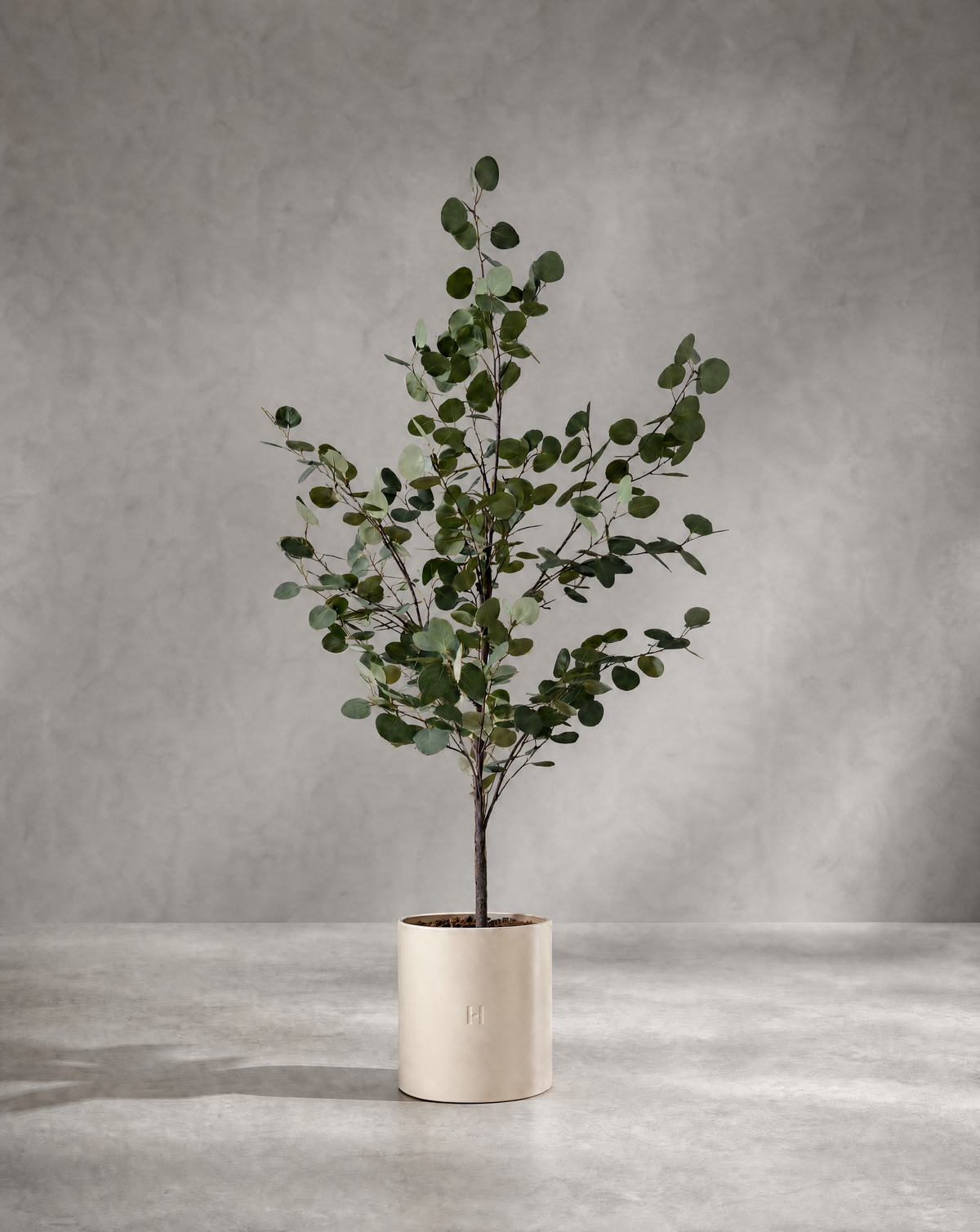
Luxury Designer Plant Pots: What Sets Them Apart from Plastic
At first glance, a planter is simply a container. But place a premium model next to a cheap plastic pot, and everything leaps out at you: the density of the material, the sharpness of the lines, the way light catches the surface. Here, in concrete terms, is what makes the difference and how to choose without going wrong.
The material: the first signal, visual and tactile

This is the criterion that immediately gives away an entry-level pot. Thin plastic sounds hollow, scratches quickly and ages badly: it whitens in the sun, warps in the heat, and holds fingerprints. A luxury designer plant pot, by contrast, plays on the perception of density and solidity.
The materials that inspire confidence share a few things in common:
- A generous thickness, which gives the object weight and avoids the "paper cup" effect.
- A considered finish: deep matt, soft satin, even grain or a well-mastered stone effect.
- A stable shade that doesn't shift over time and stays true to the image you had in mind.
The right reflex, in a shop or online: look for mentions of material and treatment. A serious maker describes precisely what they offer, because they have nothing to hide.
The finish: the devil is in the detail

Between a beautiful object and a forgettable pot, the gap often comes down to a few millimetres. Finishing touches are the small acts of craftsmanship the eye doesn't always name but always senses.
Edges and joins
Run your finger along the top rim. On a premium model, it is even, smooth, with no moulding burrs. On a cheap pot, you often feel a rough ridge, sometimes sharp, a residue of hurried manufacturing.
The surface
A successful finish stays consistent over the full height, with no random shiny patches or micro-runs. Material effects, such as concrete, terracotta or stone, should look natural rather than crudely printed.
The base and hidden details
Turn the planter over. A carefully finished base, with feet or a design thought out to avoid marking your floors, says a great deal about the overall level of finish. These are details invisible at first glance, and that is precisely why they matter.
Proportions: the balance that makes a beautiful object
A planter can tick every technical box and still disappoint if it is poorly proportioned. The relationship between height, diameter and opening changes everything, both aesthetically and in use.
A few simple guidelines to aim right:
- The visual rule of thirds: for a plant, the planter ideally takes up around a third of the total height, with the foliage making up the other two thirds. Too large a pot overwhelms the plant; too small a pot throws it off balance.
- An opening suited to the grow pot you'll slip inside. Too wide and the plant floats; too narrow and it won't fit.
- A silhouette in keeping with your room: straight, understated lines for a contemporary interior, softer curves for a warmer feel.
It is often at this level that an object "reads as luxury" without trying too hard: it simply strikes the right note.
Stability and everyday use
A high-end planter is something you live with, not just something you set down. Stability is an underrated criterion: a model that tips over at the slightest brush soon becomes irritating, especially in a hallway or near a thoroughfare.
On this point, weight cuts both ways. A very heavy planter reassures but becomes a chore to move when cleaning, redecorating or relocating a plant. The ideal lies in balance: a stable base, a solid material, but an object that stays manageable. On that note, HOPER also offers designer planters that are light and easy to move, designed to fit in anywhere without getting in your way.
Finally, think about upkeep. A beautiful surface wipes clean with a soft cloth and regains its original look. With a real-touch artificial specimen inside, you gain a display that stays impeccable all year round, with no watering or light to manage.
Pairing the planter with the plant: the finishing touch
The most beautiful planter in the world only comes into its own with the right greenery. The pairing plays on contrasts and harmonies: dense, graphic foliage thrives in an understated container, while a fine, airy silhouette can carry a more assertive pot.
For a safe bet, deep black remains a timeless base that enhances everything. The Onyx Black planter is a good example: a dense shade that highlights foliage without ever stealing the show. If you're just starting out, dip into our best-sellers for pairings that are already tried and tested.
FAQ: your questions about high-end planters
How can I recognise a quality planter from a distance, from a photo?
Look at the sharpness of the edges, the evenness of the finish and the consistency of the shade across the whole surface. A visual that shows several angles, including the base, is a good sign. Read the description too: a precisely named material is worth more than a vague "stone effect".
Is a lightweight planter necessarily lower quality?
No. Weight alone doesn't make quality. A light but well-designed model, with a stable base and a careful finish, offers the best of both worlds: it stays put and moves effortlessly when you rearrange your interior.
What size of planter should I choose for my plant?
First check the diameter of the grow pot to be inserted, then allow for a slightly larger opening. For height, aim for a planter that makes up around a third of the total height including the plant, for a natural visual balance.
In summary
What sets a beautiful object apart from a plastic pot comes down to four concrete things: a dense, durable material, sharp finishing right down to the invisible details, well-judged proportions, and stability designed for real life. At HOPER, our references are available on pre-order with shipping from late October 2026, while in-stock references ship within 48 hours.
Ready to go from theory to your living room? Browse our collection of designer planters at your leisure and find the one that will set off your interior, maintenance-free.