Realistic artificial olive tree: five ways to tell
An artificial olive tree is judged up close. From three metres, many look convincing; from fifty centimetres the differences jump out, and even more so under your fingers. Here is what to check before you buy.
1. The colour of the leaves
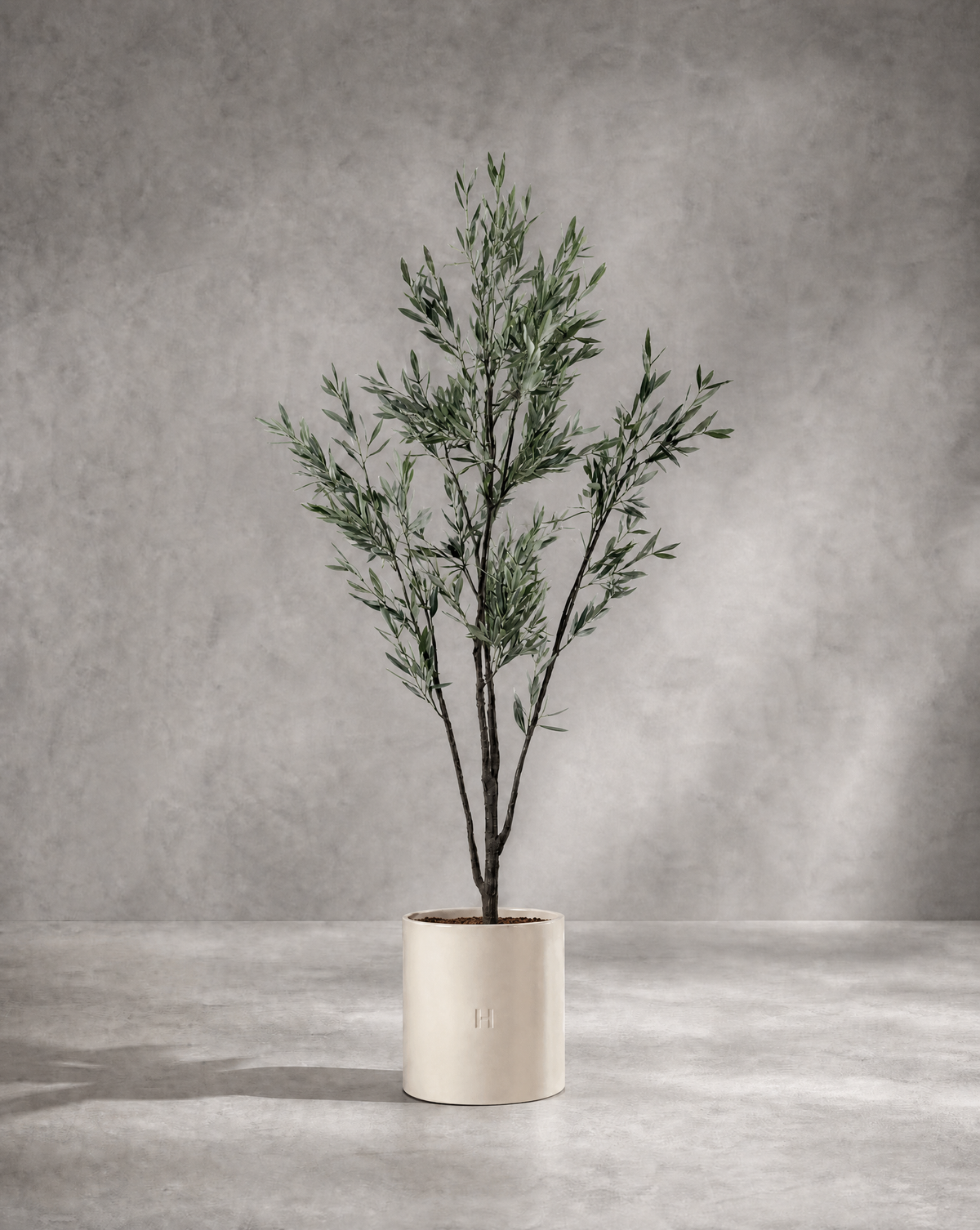
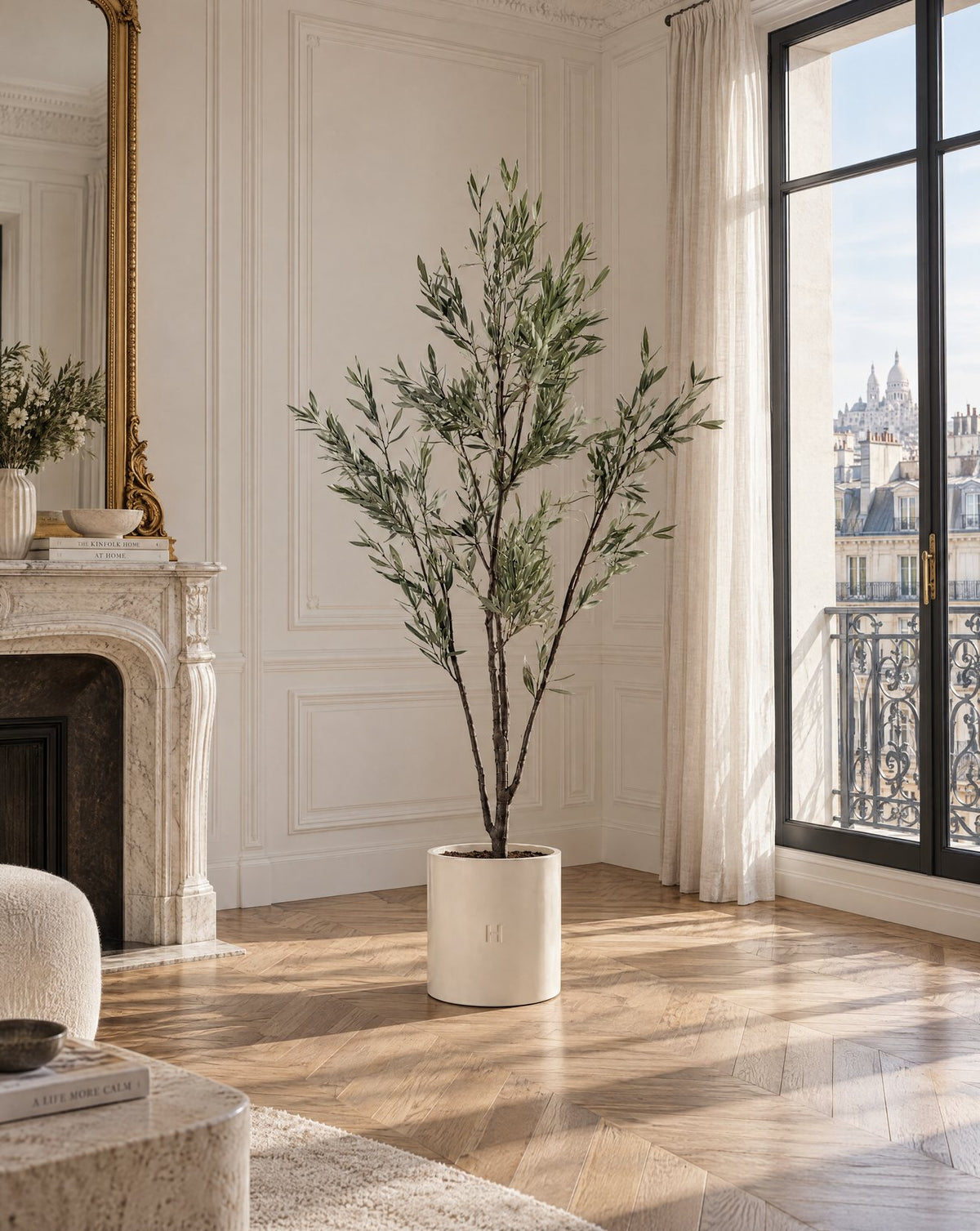
An olive leaf is thin and elongated, a blue-green that shifts with the light. Foliage that is too uniform, or that shines, gives the plastic away. Look at a photo taken in daylight, not only a cut-out on a white background.

2. The feel
A real-touch finish brings back the suppleness and freshness of a real leaf. It is often touch, more than sight, that makes people wonder.
3. The shape
An olive tree is airy and irregular. Branches that are too symmetrical, all the same length, look like an object rather than a tree.
4. Stability
A large tree must stand on its own. A weighted pot avoids a metal stand to hide, and leaves you free to choose the planter.

5. How it lasts
A UV treatment keeps the colours near a window. Care comes down to regular dusting.
The HOPER olive tree
Real-touch finish, blue-green foliage, UV-treated, delivered in its weighted pot. Sizes and prices are on the olive tree page. The planter is sold separately, in ivory, onyx black or emerald green: see the planters.