How to Clean Artificial Plants: Easy Dusting & Care Tips
An artificial plant needs neither watering nor light, but it still appreciates a little attention. Dust is its only real enemy: it dulls the foliage and gives away the artificial look. The good news is that a few simple steps are all it takes to restore its full shine, which is exactly why knowing how to clean artificial plants matters.
Why caring for an artificial plant really matters

The great advantage of an artificial plant is zero horticultural upkeep: no watering, no repotting, no yellowing leaves. But like any object placed in a room, it gathers dust over the weeks. And it is precisely that thin grey layer that breaks the illusion of realism.
Clean foliage stays vibrant, keeps its colours and retains that real touch finish that makes all the difference. Caring for your plant is therefore no chore: it is the small bit of attention that extends its beauty and lifespan for years. Allow just a few minutes a month, no more.
Regular dusting: the right approach

The golden rule: dust often and gently, rather than letting dirt settle in. Here are the methods that work best, depending on how dirty the plant is.
For everyday care
- A feather duster or dry microfibre cloth: sweep gently over each leaf, from the centre towards the tip. This is the ideal step to do once a week or fortnightly.
- A hairdryer on a cool, low setting: perfect for dense foliage or small, hard-to-reach leaves. The air blows the dust away without ever touching the fabric.
- A soft brush: very handy for flowers, fine veins or delicate details where a cloth cannot reach.
For a deeper clean
When dust has really settled in, a slightly damp microfibre cloth works wonders. Wipe leaf by leaf, then dry with a second dry cloth to avoid streaks. You can add a drop of mild soap to a little lukewarm water if the foliage is genuinely dull, then rinse with a clean, barely damp cloth afterwards.
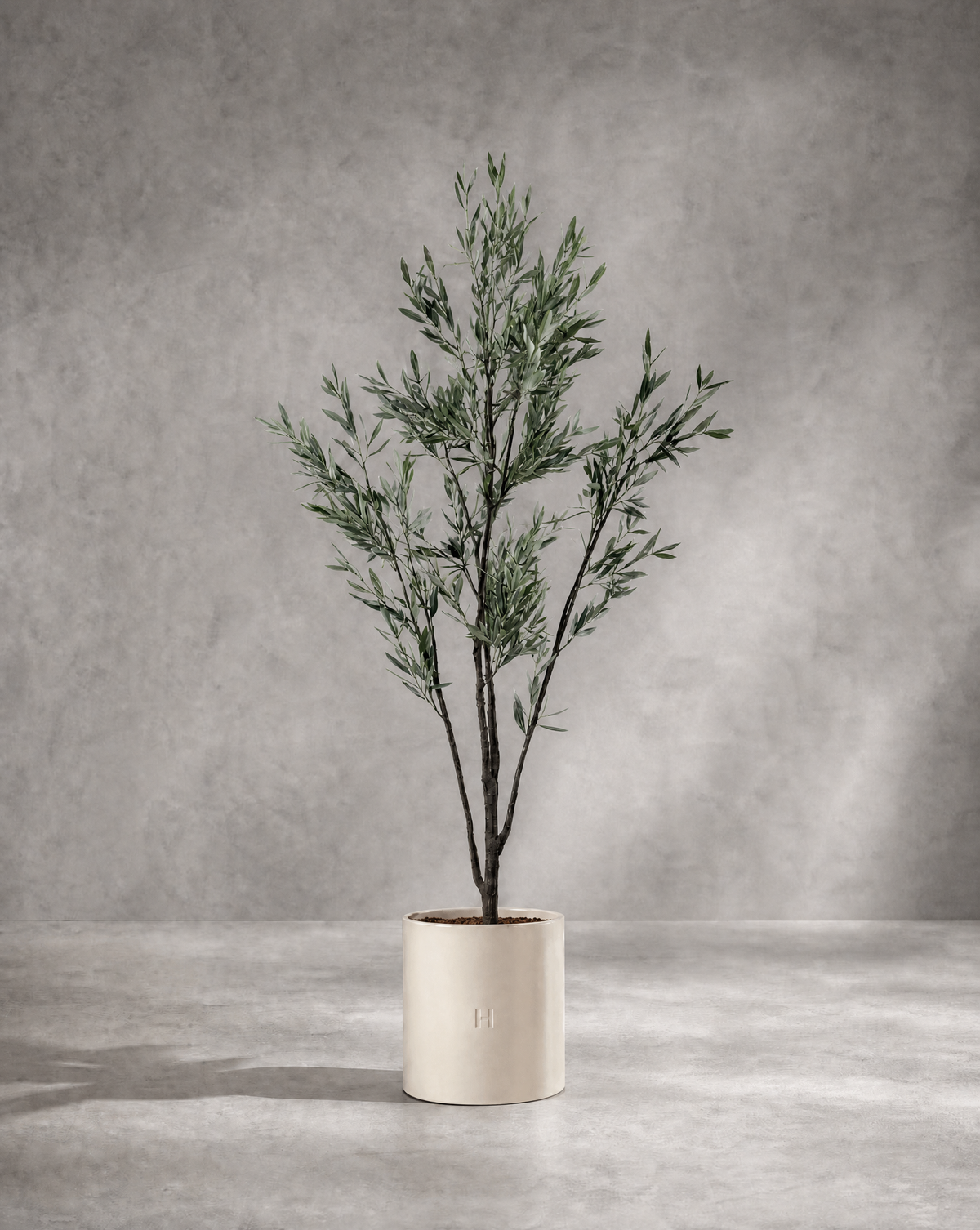
For very full plants, such as an olive tree or a ficus, you can also take them outside or into the shower and rinse them with cool water at low pressure. Let them dry completely in the open air, upside down if possible, before putting them back in place.
Mistakes to avoid at all costs
A few missteps can permanently damage quality foliage. Keep these points in mind to preserve the realism of your plants.
- Boiling or very hot water: it can warp the leaves and alter the colours. Stick to lukewarm, never hotter.
- Harsh products: solvents, pure alcohol, bleach and abrasive cleaners fade and weaken the materials. Mild soap is more than enough.
- Vigorous scrubbing: there is no need to press hard, as you risk marking the foliage. Gentleness is always more effective.
- Constant direct sunlight: even fine materials will eventually fade behind a south-facing window exposed all day long. Anti-UV treated foliage limits this risk, but it is best to reconsider very sunny spots.
- Putting away a still-damp plant: residual moisture can create odours. Always dry completely before repositioning.
Caring according to plant type and location
Not all plants are dusted in the same way. Adapting your approach to the material and the room will save you time.
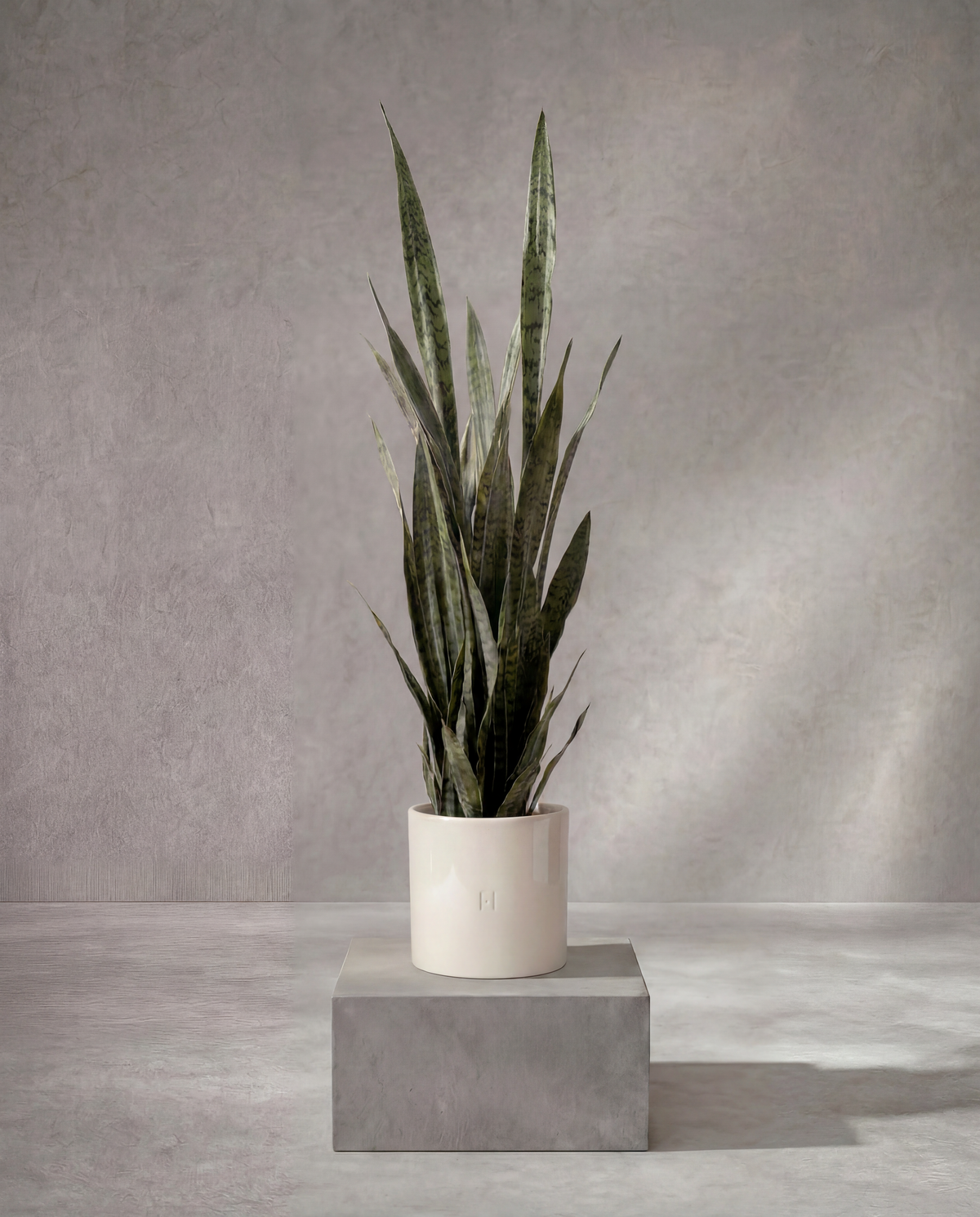
Large plants and trees, such as an olive tree or a palm, have more accessible foliage: a microfibre cloth and a little patience will do. Plants with small leaves or dense blooms prefer the cool hairdryer or the brush. As for succulents and graphic plants, their smooth surfaces come clean with a simple wipe of a damp cloth.
Location matters too. A plant placed in a kitchen picks up greasy micro-particles: plan on slightly more frequent damp cleaning. Conversely, a plant in a quiet bedroom will be content with a light dusting now and then. To choose models with realistic, easy-to-care-for foliage, browse our collection of artificial plants.
One last practical tip: to clean effortlessly, it is far easier to be able to move your plant around. This is where a lightweight container makes all the difference, and our stylish, lightweight planters lift with one hand so you can carry the plant to the sink or outdoors in an instant.
How often to care for an artificial plant
There is no need for a military routine. Here is a simple, realistic guide:
- Every week or fortnight: a quick dusting with a feather duster or dry cloth.
- Once a month: a more thorough pass, leaf by leaf.
- Two to three times a year: a full damp clean to revive the colours.
By folding these steps into your usual cleaning, your plants will stay looking superb without you really having to think about it.
FAQ: your questions on caring for artificial plants
Can you wash an artificial plant with water?
Yes, provided you use lukewarm or cool water, never hot, and dry the foliage completely afterwards. A low-pressure rinse is enough for very full plants.
How do you remove dust from very dense foliage?
A hairdryer on a cool, low setting is your best ally: it blows the dust from deep within the foliage without touching it. A soft brush finishes the job on the details.
Do artificial plants turn yellow over time?
Quality foliage keeps its colours for a long time. To avoid any fading, limit constant exposure to direct sunlight and choose UV-treated models.
In summary
Caring for an artificial plant comes down to very little: regular, gentle dusting, an occasional damp clean and a few sensible precautions. It is the small ritual that keeps your plants realistic and vibrant, season after season.
Looking for real touch foliage that lasts for years without fading? Discover our premium artificial plants, currently available for pre-order with shipping in October 2026.