High-End Artificial Plants: How to Spot Real Quality
All artificial plants look alike in a photo, but not in your living room. The difference comes down to precise details, the ones that fool the eye and last for years. Here is how to recognise a high-end artificial plant before inviting it into your home.
Real touch feel: the first genuine test

A premium artificial plant is recognised first by touch. So-called real touch foliage uses supple materials, slightly satiny or velvety, that mimic the texture of a genuine leaf. You can feel fine veins under your fingers, varying thickness across the surface, sometimes a subtle natural wax on quality models.
Conversely, a low-quality plant gives itself away quickly: hard plastic, identical leaves throughout, a uniformly glossy surface that catches the light in an artificial way. If the foliage crackles like a plastic bag when you gently crumple it, move on.
The right instinct: always look for the real touch label and, if you can, touch several leaves at different heights. On a serious product, the quality stays consistent from the bottom right up to the crown.
Colours and shades: nature is never one flat tone

A real leaf never has a single colour. It blends greens, lighter touches near the veins, sometimes slightly yellowed or reddened hints along the edges. A high-end artificial plant reproduces these variations with subtle gradients and multi-layered printing.
Beware of uniform green, that flat pine-green shade that screams fake from three metres away. Look at the underside of the leaves too: on well-crafted models, the reverse is more matte and lighter than the top, exactly as in nature.
A detail that never lies
Look closely at the veins. On a premium plant they are raised, branching, never perfectly symmetrical. On an imitation they are often printed flat, or worse, absent altogether. It is a reliable clue to the product's grade.
The trunk, the branches and the structure
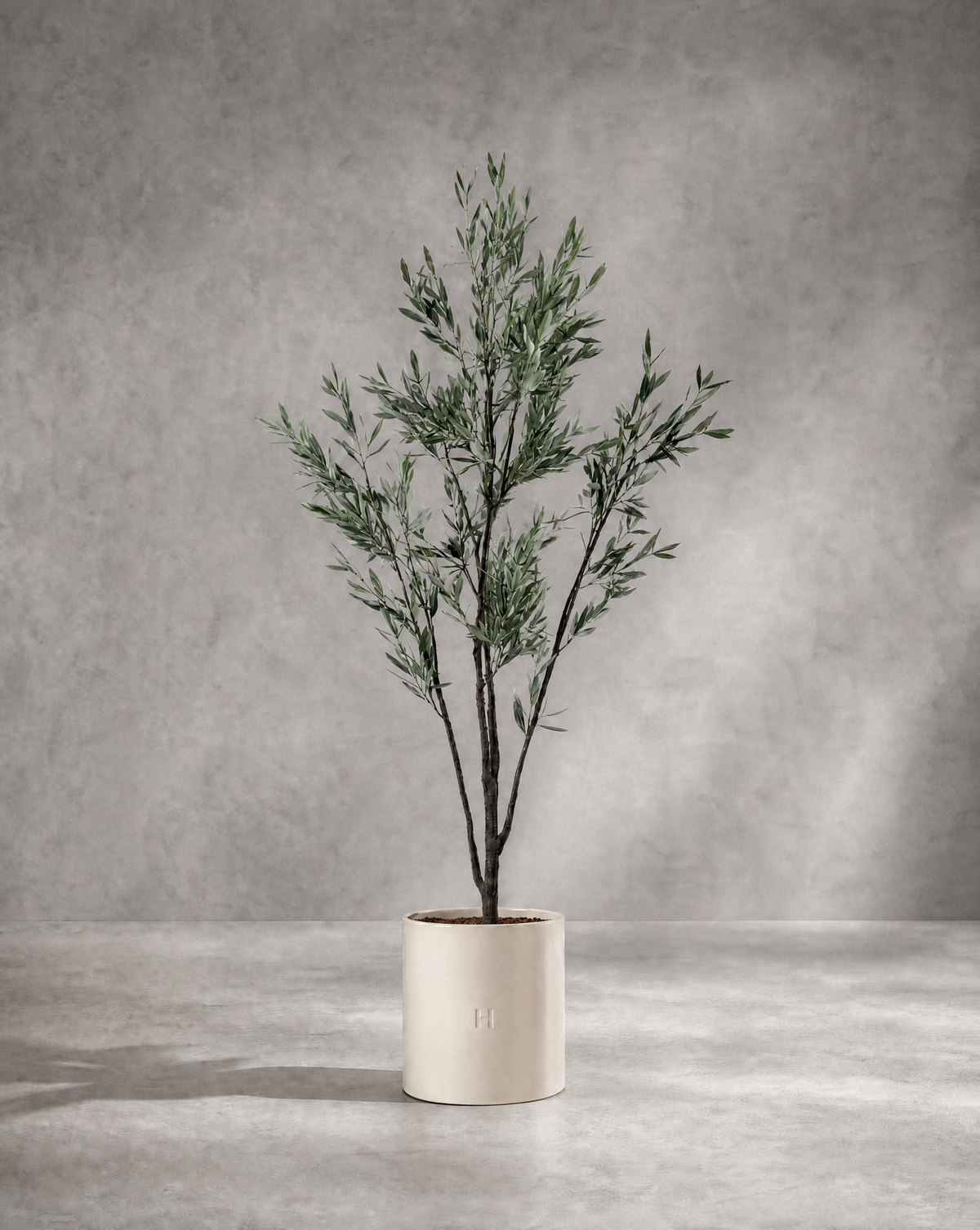
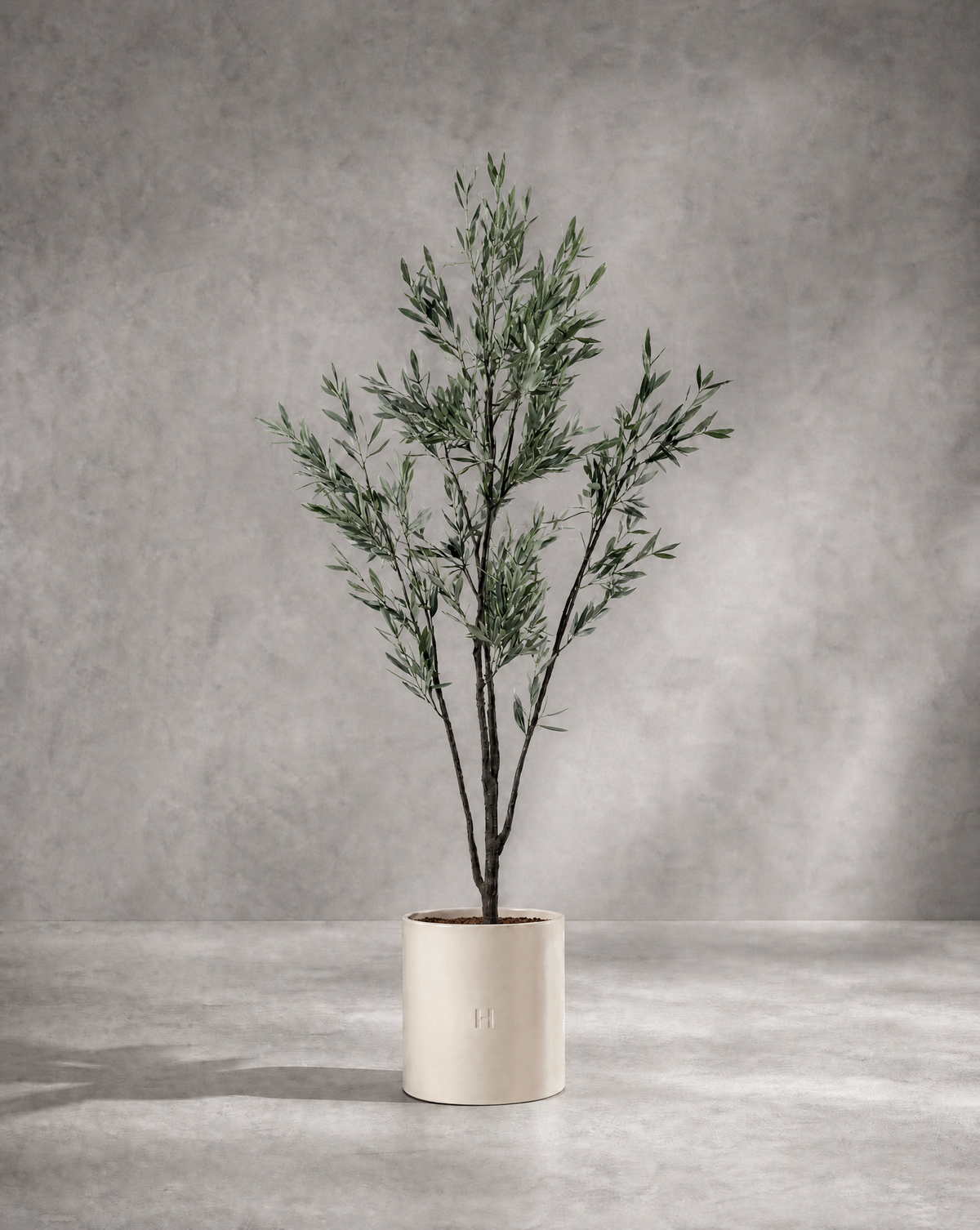
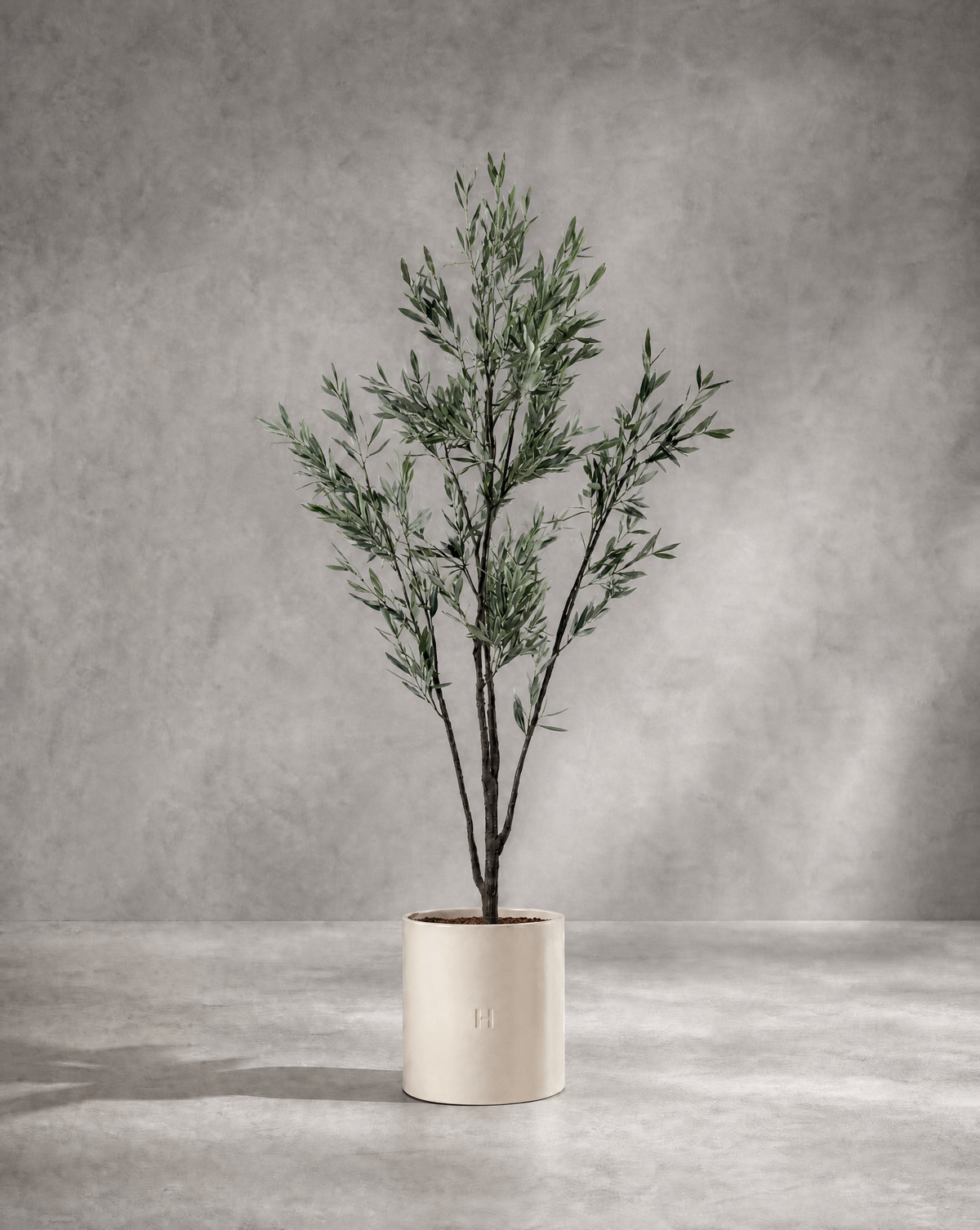
The foliage draws the eye, but it is often the trunk that reveals the level of finishing. A high-end olive tree or ficus has a carefully worked trunk: textured bark, shades of brown and grey, small irregularities, sometimes genuine natural fibres wrapped around a solid frame.
Check these concrete points:
- Rigidity: the trunk should stand straight without wobbling, without leaning at the slightest draught.
- Adjustable branches: on fine pieces, you can spread and angle the branches to create a natural shape and avoid the stiff umbrella effect.
- The joints: the connection points between trunk and branches should be discreet, ideally hidden by the foliage or bark, never a large visible plastic stud.
A well-designed structure also means a plant that keeps its silhouette over time, without sagging after a few months.
Density, height and overall appearance
A sparse plant immediately looks like cheap décor. High-end models rely on generous, well-distributed foliage density, with leaves of slightly different sizes for a lifelike result.
Take the time to check the stated height too, whether or not the pot is included. A fine piece is designed in proportion: a trunk neither too thin nor too thick for its size, a balanced crown. To choose the right dimension for your room, our collection of high-end artificial plants lists the heights to help you picture the result at home.
If you are unsure about a first purchase, the safe bets are often a good starting point. You can take a look at the HOPER best-sellers, the models most praised for their realism and elegance.
The base, the weighting and the pot finish
A plant that topples at the first knock is the sign of a carelessly made product. On a high-end artificial plant, the base is weighted or designed to be easily stabilised, guaranteeing impeccable stability, even for tall specimens.
The pot supplied is sometimes basic, and that is normal: many fine plants are sold in a neutral grower's pot, ready to slip into the container of your choice. This is precisely the chance to perfect the presentation. HOPER offers, in fact, stylish, lightweight planters, easy to move from one room to another whenever you fancy a change.
Finally, check that the base is watertight and clean: no synthetic foam that crumbles, no visible glue. The devil is in these finishing details.
FAQ: your questions about premium artificial plants
Does a high-end artificial plant really require zero maintenance?
Yes, no watering and no light. A simple regular dusting with a soft cloth or a feather duster is enough to keep it looking its best. That is the whole point: the look of a real plant, without the constraints.
Can you place an artificial plant near a window in full sun?
Quality models cope far better with light, but no material is entirely immune to UV over the very long term. Our pieces are UV-treated and suited to sheltered outdoor spaces such as a covered terrace, a conservatory or a shaded patio. To preserve the colours, avoid constant direct exposure in full southern sun all day long.
How do you clean real touch foliage without damaging it?
A dry or slightly damp microfibre cloth does most of the work. For very fine leaves, a blast of cold air from a hairdryer lifts the dust without effort. Avoid abrasive products and excess soapy water.
In short, trust the details
Touch the foliage, look for the colour variations, inspect the trunk and the base: these four checks are enough to tell a genuine premium piece apart from an imitation. A fine artificial plant is an investment that will enhance your interior for years, without the slightest maintenance.
Ready to take the plunge? The house is currently taking pre-orders with shipping in October 2026. Take your time to browse our high-end artificial plants and find the one that will bring your room to life.